



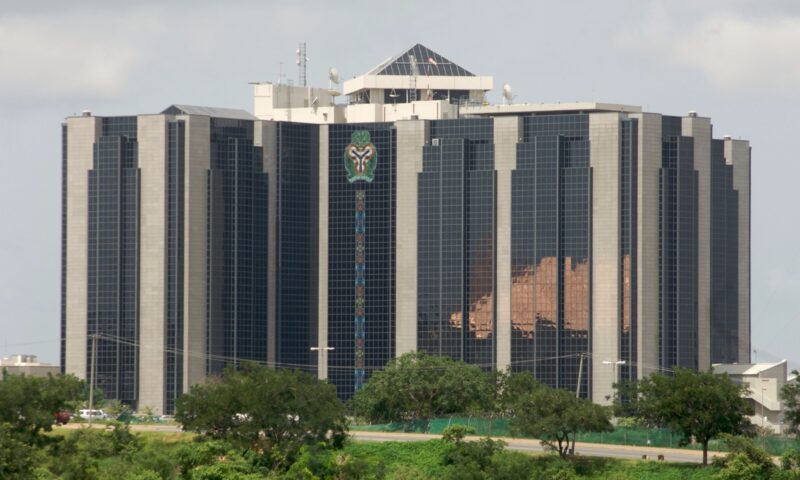
Not long ago, Nigeria’s Central Bank wanted nothing to do with cryptocurrency. In February 2021, the Central Bank of Nigeria (CBN) directed banks and financial institutions to shut down all accounts linked to crypto transactions, citing concerns about financial stability, money laundering, and consumer protection. Fast forward five years, and the same regulator is now referencing stablecoins dozens of times in its official payments blueprint. It is one of the most dramatic policy reversals in Nigeria’s financial history.
The CBN mentioned stablecoins at least 68 times in its newly released Payments System Vision 2028 (PSV 2028). The document signals a fundamental shift in how Africa’s largest economy views digital assets, not as threats to be banned, but as tools to be regulated and deployed within the national payments infrastructure.
ALSO READ:
The numbers behind this shift are hard to ignore. Between July 2024 and June 2025, Nigeria received approximately $92.1 billion in crypto-asset value, with stablecoins driving much of that growth, nearly triple that of the next country on the continent, South Africa, according to blockchain analytics firm Chainalysis. A stablecoin is a digital currency pegged to a stable asset such as a fiat currency, designed to minimize the price volatility associated with traditional cryptocurrencies. More than 65% of crypto inflows into Nigeria are now denominated in stablecoins, with Tether’s USDT and Circle’s USDC dominating activity, according to a new International Monetary Fund (IMF) report on Nigeria.
The appeal of stablecoins for ordinary Nigerians is straightforward. For households, stablecoins could serve as a cheaper alternative for receiving remittances, which amount to about $21 billion annually in Nigeria. By moving funds directly over blockchain networks, they cut out the layers of intermediaries that typically inflate transfer and foreign exchange fees. For freelancers working with international clients, stablecoins offer a faster and more accessible payment rail. For businesses, they increasingly function as a tool for treasury management and cross-border settlement.
The CBN now wants to bring all of this activity under formal oversight. The regulator is pursuing targeted legislative amendments to provide clear statutory recognition of fiat-collateralised stablecoins as monetary instruments, and it intends to collaborate with the Securities and Exchange Commission (SEC) and other key stakeholders to develop a unified policy position on their classification.
Beyond payments, the CBN sees stablecoins as a potential new source of foreign exchange liquidity. For foreign currency-backed stablecoins, including dollar-backed instruments, the central bank is evaluating rules that would require a minimum portion of reserves to be held domestically with approved commercial banks. This would pull dollar reserves that currently sit outside Nigeria’s regulatory visibility into the formal financial system, giving the CBN better oversight of capital flows.
PSV 2028 also proposes the possibility of CBN observer nodes operating on approved blockchain networks, providing real-time visibility into stablecoin issuance, redemption, circulation, and reserve positions. Rather than relying on periodic reports from regulated institutions, the regulator wants to monitor activity directly through blockchain infrastructure, a move that reflects a broader global trend toward supervising digital rails rather than banning them.
The risks, however, remain real. The IMF has warned that widespread use of dollar-backed stablecoins could deepen currency substitution, weaken the naira, and complicate monetary policy. The CBN’s framework therefore distinguishes between fiat-backed stablecoins suitable for remittances and trade, and asset-backed stablecoins that would require stricter transparency and valuation oversight.
What is clear is that the policy conversation in Nigeria has moved decisively forward. Stablecoins are no longer being debated as speculative assets at the fringes of finance. They are now part of how Nigeria’s central bank intends to redesign the way money moves into, out of, and across the country, and the framework to govern that future is already taking shape.