




The United Kingdom has taken one of its boldest steps yet in the fight to protect children online. The British government has announced that children under the age of 16 will be prohibited from accessing social media platforms, with the ban expected to take effect in early 2027. It is a decision that has been years in the making, and one that signals a sharp shift in how Western governments are choosing to deal with the growing mental health crisis among young people.
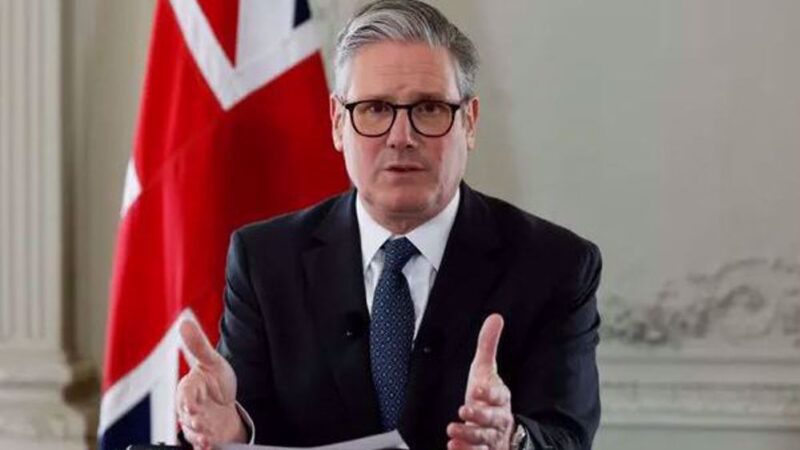
Prime Minister Keir Starmer made the announcement at a press conference, describing a full ban as the right choice and stressing that the government would not compromise on the safety of children. For many parents across Britain who have spent years watching their children grow up glued to screens, the news came as a long-awaited relief.
CHECK OUT:
The platforms that will be affected include TikTok, Instagram, Snapchat, YouTube, Facebook, and X. The proposal would also restrict livestreaming and communication with strangers on gaming platforms, though messaging apps like WhatsApp and Signal are exempted for now. The government has made clear that the ban is not a half-measure. It is a comprehensive framework designed to close the loopholes that tech platforms have long exploited.
The UK’s regulations are more layered than similar laws introduced in Australia and Canada. Under-16s face a complete ban from all major social media platforms, under-17s are prohibited from accessing livestreams and chatting with strangers online, and under-18s will not be allowed to use romantic AI chatbots that simulate relationships. These tiered protections reflect an understanding that online harm does not look the same at every age.
The government is also exploring additional measures, including overnight curfews for social media use and mandatory breaks in infinite scrolling feeds for users under 18, with further details on those proposals expected in July. These additions suggest that the government sees this ban not as a ceiling, but as a starting point.
Legislation is expected to be introduced before Christmas 2026, with the ban coming into force in early 2027. That timeline gives tech companies roughly 18 months to build and deploy robust age verification systems, something the industry has historically resisted doing voluntarily.
UK technology secretary Liz Kendall noted that Britain plans to learn from Australia’s experience by making it far harder for children to bypass safeguards. Australia, which became the first country in the world to implement such a ban, has since found that while the number of under-16s on social media has dropped, significant numbers are still finding ways around the restrictions.
The UK’s move is part of a wider global reckoning. Research has linked heavy social media use to anxiety and depression in adolescents, and high-profile cases of children encountering harmful online content have fueled the push for legislative action. Governments from Paris to Madrid are now wrestling with the same question: at what point does the freedom of a platform become a danger to a generation?
Britain has answered that question. The ban will happen, and the clock is ticking for Silicon Valley to comply.