



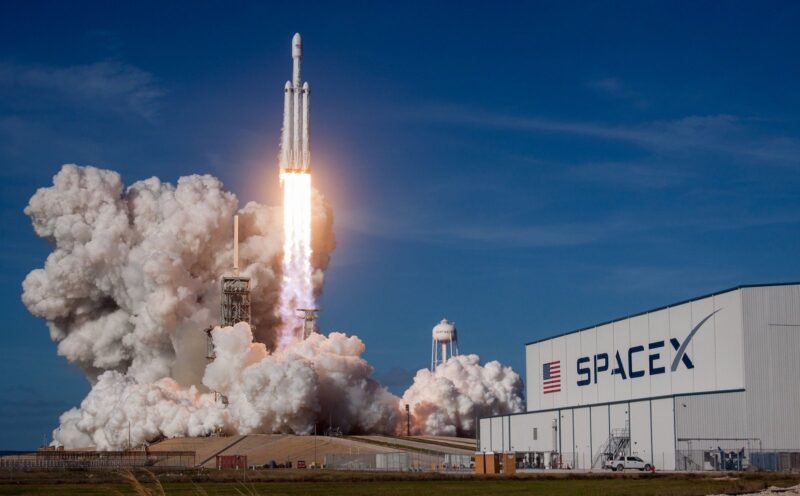
Today, 12th June 2026, the financial world is witnessing more than a blockbuster stock market debut. It is watching the largest Initial Public Offering (IPO) in history.
Trading under the ticker SPCX on the Nasdaq, Space Exploration Technologies Corp. (SpaceX) has entered the public markets at a staggering $1.77 trillion valuation. The company raised approximately $75 billion in the offering, eclipsing the previous record set by Saudi Aramco, which raised $25.6 billion during its 2019 debut.
Yet the most remarkable aspect of the listing is not the amount of money raised. It is how SpaceX, led by Elon Musk, challenged many of Wall Street’s long-standing IPO conventions and convinced investors to embrace a different approach.
The listing also marks the end of years of anticipation. For more than a decade, SpaceX remained one of the world’s most valuable private companies while transforming the aerospace industry through reusable rockets, expanding Starlink into a global communications network, and positioning itself at the center of emerging technologies. As a result, its eventual public debut became one of the most closely watched financial events in modern market history.
Rewriting the IPO Playbook
In a traditional IPO, investment banks spend weeks conducting roadshows, gathering feedback from institutional investors, and refining a price range before settling on a final offering price.
SpaceX took a different route.
Instead of allowing the market to determine the final price through the usual process of price discovery, the company set a fixed offering price of $135 per share before the roadshow began. Investors were effectively presented with a simple choice: participate at the stated price or step aside.
The move reflected an unusual level of confidence from the company and highlighted the leverage that comes with commanding extraordinary investor demand.
Low Supply, Extraordinary Demand
The structure of the offering played a critical role in its success.
SpaceX sold 555.6 million Class A common shares while listing less than 5% of its total equity on public markets. Underwriters were also granted an over-allotment option for an additional 83.3 million shares, potentially increasing the total amount raised beyond $86 billion.
By keeping the publicly available share count relatively limited, SpaceX created intense competition among investors seeking exposure to the company.
The result was overwhelming demand. Orders reportedly exceeded three times the available allocation, generating more than $250 billion in interest from institutional investors, hedge funds, and sovereign wealth funds around the world.
Putting Retail Investors at the Center
One of the most notable features of the offering was the unusually large allocation reserved for retail investors.
Historically, large IPOs have directed the overwhelming majority of shares toward institutional buyers, leaving individual investors with only a small portion of the offering.
SpaceX shifted that balance by allocating between 20% and 30% of available shares to retail participants through brokerages such as Robinhood, Fidelity, and Charles Schwab.
The strategy not only broadened access to one of the most anticipated IPOs in history but also helped establish a substantial base of long-term shareholders from day one.
Why Investors Are Paying Such a Premium
The scale of SpaceX’s valuation has sparked significant debate among analysts.
According to reported financial figures, the company generated approximately $18.67 billion in revenue during fiscal year 2025 while recording a net loss of $4.94 billion. At its IPO valuation, SpaceX is trading at roughly 92 times trailing sales a multiple that would appear difficult to justify using traditional aerospace industry benchmarks.
However, investors are not valuing SpaceX as a conventional aerospace manufacturer, instead, many view the company as a unique combination of launch infrastructure, satellite communications, artificial intelligence infrastructure, and future space-based computing. The company’s investment case increasingly extends beyond rockets and launches into broader themes that include connectivity, AI, defense, and next-generation digital infrastructure.
Starlink remains a central pillar of that thesis. With more than 12 million subscribers worldwide, the satellite internet network has become one of the company’s most important growth engines and a major source of recurring revenue.
At the same time, SpaceX’s expanding relationship with artificial intelligence initiatives—including projects linked to data center infrastructure and long-term concepts such as orbital computing—has strengthened the perception that the company could play a pivotal role in the future of global digital infrastructure.
READ ALSO: Equal AI raises $30M to Automate Call Screening in India
The Bigger Question
The first day of trading will naturally attract headlines, but the broader significance of this IPO extends far beyond short-term market performance while we anticipate other upcoming IPOs SpaceX’s public debut represents a test of whether investors are willing to place trillion-dollar bets on the convergence of space technology, artificial intelligence, and global connectivity. It also raises an important question for the future of capital markets: can the world’s most influential private companies bypass traditional IPO conventions and still command overwhelming demand?
READ ALSO: Elon Musk Becomes the World’s First Trillionaire After SpaceX IPO Pushes Net Worth Above $1 Trillion
By setting its own terms, maintaining tight control of supply, and bringing retail investors deeper into the process, SpaceX has delivered an IPO that mirrors the ambition that made the company famous in the first place.
Regardless of how the stock performs in the coming weeks, one thing is already clear: the traditional Wall Street IPO playbook may never look quite the same again.